Case Studies: Brands Winning with Personalization
Quick Summary
Personalization is becoming a key strategy for brands to engage with customers by utilizing data and AI to create tailored experiences. This approach not only boosts sales but also enhances customer retention and loyalty. The article highlights the successful personalization strategies of leading brands such as Amazon, Sephora, Netflix, and Delta. It underscores the importance of personalization by noting that 75% of consumers are likely to spend more with brands that provide personalized experiences. However, personalization must be done well, as 71% of consumers are likely to disengage if it's not. The use of data-driven insights allows these brands to craft unique interactions that resonate with their customers, making personalization a crucial component of modern business strategies.
Personalization is transforming how brands connect with customers. By leveraging data and AI, businesses are delivering tailored experiences that drive sales, improve retention, and build loyalty. This article explores how top brands like Amazon, Sephora, Netflix, and Delta are excelling with personalization strategies.
Key Takeaways:
- Why Personalization Matters: 75% of consumers spend more with brands offering personalized experiences. Done poorly, 71% disengage.
- Data-Driven Insights: Using tools like AI, predictive modeling, and real-time behavior tracking, brands are crafting precise, timely messages.
- Success Stories:
- Amazon: AI-powered recommendations generate 35% of its revenue.
- Sephora: Combines in-store and online data for consistent customer profiles.
- Netflix: Customizes content for each user based on viewing habits.
- Delta Air Lines: Offers AI-driven travel assistance through its Fly Delta app.
- Actionable Steps: Start with unified customer data, focus on one lifecycle stage, and prioritize privacy compliance.
Personalization isn’t optional – it’s a necessity for modern businesses. Keep reading to learn how these strategies can work for you.
Personalization as a Competitive Advantage
How Personalization Shapes Brand Positioning
Personalization does more than enhance customer experience – it positions a brand as attentive and capable. Unlike generic campaigns, tailored experiences show customers that they’re more than just a number.
The numbers speak for themselves: 75% of consumers are willing to spend more with companies that offer personalized experiences. On the business side, 77% of leaders report that personalization drives higher customer retention. But here’s the catch: 71% of consumers will disengage if personalization feels irrelevant or intrusive. So, while personalization can be a game-changer, doing it poorly can backfire.
For brands targeting a premium market, personalization sends a clear message: customers are known and valued. It also helps cut Customer Acquisition Costs by making the most of existing traffic and increases Average Order Value through targeted cross-selling. Across industries like retail, beauty, media, travel, and small businesses, this strategy has proven to deliver a competitive edge.
Data and Technology That Power Personalization
The key to effective personalization lies in the quality of your data. Top-performing brands aren’t just amassing data; they’re focusing on the right data and ensuring it’s accessible across departments. The goal? A single source of truth – a unified customer view that marketing, sales, and support teams can all use.
Here’s a breakdown of the five core data types driving personalization:
| Data Type | What It Is | How Brands Use It |
|---|---|---|
| Identity Data | Firmographics, role, location | Customizing homepage content based on industry or region |
| Zero-Party Data | Preferences shared directly by the customer | Providing precise, 1:1 product recommendations |
| Intent Data | Clicks, scroll depth, browsing behavior | Recognizing purchase readiness for timely outreach |
| Contextual Data | Support history, purchase arc | Avoiding missteps, like upselling to a customer with an unresolved complaint |
| Sentiment Data | Emotional tone of interactions | Directing frustrated customers to human retention specialists |
On the tech side, AI and machine learning have taken personalization to the next level. Modern systems don’t just react; they predict what customers need before they even ask. This proactive approach has delivered real results: AI-driven real-time personalization can boost Return on Ad Spend (ROAS) by 250% to 320%, while intent-based landing pages can increase conversions by 200% compared to static pages.
“In 2026, personalization is no longer a feature – it’s the baseline requirement for any DTC store to remain competitive.” – Carolina Waitzer, Vice-President & Co-CEO, DeSight Studio
Speed is another crucial factor. Traditional server-side personalization takes 300–800 milliseconds to load, but AI deployed at the edge can make decisions in under 100ms. That difference can significantly impact bounce rates and conversions.
With these advanced data strategies and technologies in place, brands are well-equipped to deliver personalization that truly resonates. The following case studies illustrate how this plays out across various industries.
Driving Growth Through Personalization in AI - Mark Abraham

Case Studies: Brands Getting Personalization Right
Real-world examples show how businesses are using customer data to drive growth. From retail and beauty to media, travel, and small businesses, these brands have turned insights into measurable success.
Retail: How Amazon's Recommendation System Works
Amazon’s recommendation engine is responsible for about 35% of its total revenue, translating to roughly $200 billion annually as of 2023. This system has evolved over time, moving from Item-to-Item Collaborative Filtering (1998–2010) to Gradient-Boosted Decision Trees (2010–2018), and now relying on Deep Neural Networks and GenAI since 2018. For instance, if a customer purchases running shoes and a GPS watch, the algorithm might suggest a foam roller as the next logical item.
Amazon also uses Large Language Models (LLMs) to refine product titles based on shopper intent. For example, a health-conscious buyer searching for snacks might see “gluten-free” emphasized in product titles. This subtle tweak can significantly boost click-through rates. As Mihir Bhanot, Amazon’s Director of Personalization, explained:
“If the primary LLM generates a product description that is too generic or fails to highlight key features unique to a specific customer, the evaluator LLM will flag the issue.”
All of this happens incredibly fast – Amazon’s recommendation pipeline completes the process, from retrieving options to ranking them, in under 100 milliseconds. This advanced personalization in retail could inspire similar innovation across other industries.
Beauty: Sephora's Omnichannel Personalization Approach
Sephora’s Beauty Insider loyalty program connects over 34 million active members and plays a significant role in driving sales. What makes Sephora stand out is its seamless integration of in-store and online data. Tools like Color IQ, which scans a customer’s skin tone, feed directly into their digital profiles. This ensures accurate product recommendations online without requiring customers to re-enter preferences.
In March 2024, Sephora began piloting its app within ChatGPT in the U.S., offering personalized beauty advice linked to Beauty Insider profiles. Global Chief Digital Officer Anca Marola shared:
“At Sephora we are passionate about assisting our customers with the best beauty advice and curation, wherever and whenever they want. Today this means piloting the Sephora app on new intelligent channels such as ChatGPT.”
Sephora also uses AI to predict when customers might need to restock products, sending timely reminders. Virtual try-on tools powered by AI have increased online sales by 20%. This blend of physical and digital personalization sets the standard for customer engagement.
Media: How Netflix Personalizes Content for Each User
Netflix customizes nearly every aspect of the viewing experience. From the order of titles on the homepage to the specific thumbnail images for shows, everything is tailored to individual preferences. The platform uses data like viewing history, time of day, device type, and interaction patterns to refine recommendations continuously. Rather than pushing the most popular content, Netflix ensures its interface feels uniquely curated for each user.
Travel: How Delta Air Lines Uses Data to Serve Travelers
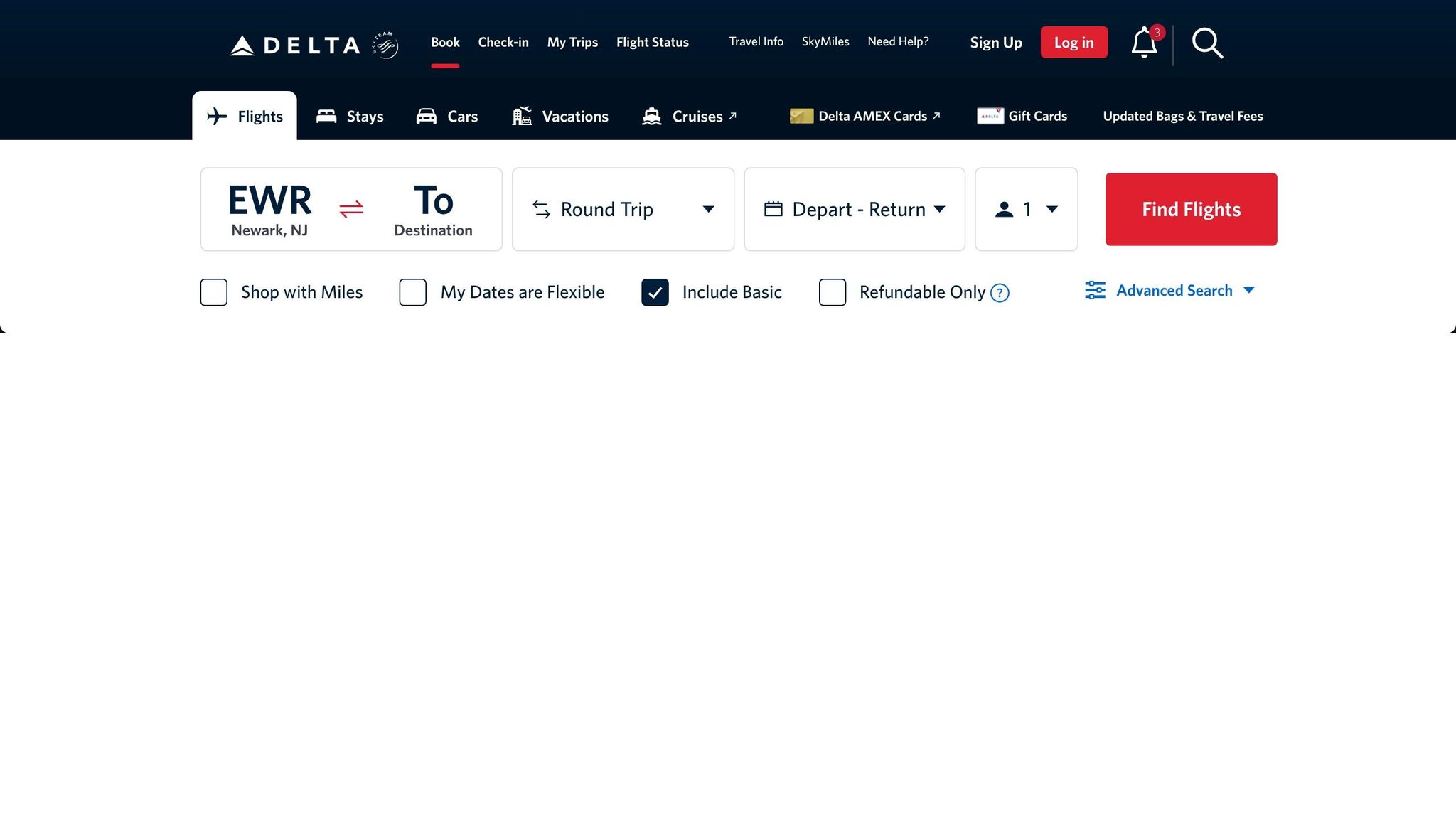
Delta has taken personalization to new heights by focusing on meaningful customer experiences rather than just targeted ads. The airline invested about $500 million over several years to migrate its tech infrastructure to AWS, enabling advanced AI and data analytics.
The Fly Delta app’s Delta Concierge feature is central to this strategy. Using generative AI and SkyMiles profiles, it delivers personalized insights like passport expiration alerts, weather-based packing tips, and real-time gate directions – often before the traveler even asks. CEO Ed Bastian described the vision:
“Our vision for Delta Concierge is that it will serve as an AI-powered personal assistant that combines the context of who our customers are and how they like to travel, with the deep knowledge and insights we’ve built.”
Onboard, the Delta Sync system personalizes seatback entertainment based on viewing habits and SkyMiles status. Passengers can also set preferences like “Do Not Disturb” or “Wake for meal service”. Since its launch, Delta Sync has driven the enrollment of over 3 million new SkyMiles members, with 97% of Medallion members using the Fly Delta app as their go-to travel tool.
Small Business: Visual Soldiers' Tailored Design Approach
Personalization isn’t just for large corporations with big budgets. Visual Soldiers, a creative agency based in Atlanta, shows how smaller businesses can also stand out by offering tailored solutions.
The agency builds its strategies by deeply understanding a client’s audience, positioning, and goals. Their services range from branding and UX/UI design to app development, ad creative, and more – all customized to fit the client’s unique needs. For growing businesses, this kind of personalized design can make the difference between blending in or leaving a lasting impression. Visual Soldiers proves that even smaller teams can achieve big results through focused, individualized strategies.

Key Lessons and Steps for Implementation
What Successful Brands Have in Common
When you look at success stories across industries – retail, beauty, media, travel, and small business – a clear pattern emerges: successful brands prioritize unifying customer data. Whether they rely on a Customer Data Platform (CDP) or a smart CRM system, the main goal is to create a single, cohesive view of the customer by integrating data across all teams.
Another common trait is the move away from static campaigns. A standout example is The Coca-Cola Company, which consolidated 98 million customer profiles from over 100 countries into a single Adobe Real-Time CDP in just five months in 2023. Using Adobe Journey Optimizer, Coca-Cola launched over 350 personalized email journeys, including a U.S. sweepstakes campaign that used location-based personalization to boost click-through rates by 63%. Keith Bartig, Director of Precision Marketing Technologies at Coca-Cola, emphasized the importance of this approach:
“The ability to bring all of our consumer information together – in real time – is critical to helping us engage with billions of Coca-Cola consumers around the globe.”
Lastly, continuous testing is key. Saks Global demonstrated this by using machine learning and Mastercard Dynamic Yield to adjust homepage content in real time based on predicted customer intent. By implementing this strategy across 100% of Saks.com traffic in August 2025, they achieved a 7% increase in revenue per visitor and nearly a 10% improvement in conversion rates.
These shared practices point to actionable steps for brands aiming to excel in personalization.
Best Practices for Running Personalization Programs
Personalization isn’t just about technology – it’s about aligning your entire organization. Tools matter, but so does teamwork.
A proven method is the 90-day roadmap. Here’s how it works:
- Month 1: Audit your CRM data and integrate online and offline sources.
- Month 2: Focus on a high-value customer segment, enrich your data (through quizzes or preference centers), and launch a behavioral workflow.
- Month 3: Introduce AI for routine tasks and establish feedback loops to adjust marketing based on customer sentiment.
This structured approach can lead to measurable results.
At the same time, privacy compliance is non-negotiable. With high consumer concerns around data usage, transparency is critical. Offering a clear value exchange – where customers understand the benefits of sharing their preferences – can help build trust. Tools like consent management platforms, preference centers, and communication frequency controls are essential for any personalization strategy.
How Design Partners Like Visual Soldiers Can Help
To make personalization work, you need a front-end experience that’s as adaptable as your strategy. This is where design partners like Visual Soldiers shine. Their expertise in modular design systems allows brands to quickly swap out headlines, images, and offers without needing to rebuild entire pages.
Take their work with Airia in May 2025 as an example. Visual Soldiers developed a modular WordPress site featuring custom isometric illustrations and a “meganav” to guide various user types through multiple product paths. This setup was designed to scale as the brand grew, reducing website launch times by 50% on average. For businesses looking to balance speed with brand consistency, this kind of infrastructure is invaluable.

Conclusion: Growing Your Brand Through Personalization
The brands mentioned in this article – Amazon, Sephora, Netflix, Delta, and others – excel by making every customer interaction count. They focus on being relevant, tailoring their approach to meet individual needs and preferences. Personalization, when done right, is about understanding your audience and offering solutions that resonate.
The numbers back this up: brands that prioritize personalization enjoy 71% higher customer loyalty. Specific strategies have also led to impressive revenue growth, with some seeing increases of 110% and 25% year-over-year, respectively. For example, Half Magic leveraged RFM analysis to automate nurture sequences, leading to a 110% YoY revenue boost. Similarly, Every Man Jack used predictive analytics to anticipate reorders, achieving 25% YoY revenue growth. These outcomes highlight the power of consistent, data-driven strategies.
“A computer can know and remember as much marketing detail about 200 million consumers as did the owner of a crossroads general store about his handful of customers.” – Lester Wunderman, Direct Marketing Pioneer
Personalization not only drives growth but also maintains a sense of human connection, even at scale. These insights provide a roadmap for any brand looking to embrace personalization effectively.
Key Takeaways
These examples underline one clear message: personalization, when guided by data, leads to success. Here’s what sets thriving brands apart:
- Start with data. Build a unified customer profile that combines behavior, preferences, and purchase history across all channels.
- Focus on one lifecycle stage at a time. Whether it’s moving a customer from anonymous to known, from sales to service, or from service to retention, personalize each stage thoroughly before expanding.
- Keep design flexible. Modular systems, like those Visual Soldiers created for Airia, help marketing teams move quickly without compromising the brand experience.
- Make privacy a priority. Transparency and a fair value exchange aren’t just about compliance – they’re essential for earning the trust needed to collect valuable data.
The brands leading in personalization aren’t waiting for ideal circumstances. They’re starting with what’s available, testing constantly, and refining their strategies along the way. This proactive approach is what sets them apart.
Personalization Starts With the Right Digital Experience
The most successful brands don't just collect customer data—they use it to create meaningful experiences. We help businesses build brands, websites, and digital products designed to convert every interaction into long-term loyalty.
Start Your ProjectFAQs
The first step is to map out all the data sources within your organization and clearly define what makes up a customer entity. This means conducting a thorough audit of your data systems – like point-of-sale platforms, e-commerce tools, CRM software, loyalty programs, email systems, and mobile apps.
For each system, document key details such as unique identifiers and the quality of the data being collected. Taking the time to align these definitions across your teams is crucial. Why? Because consistent definitions are the backbone of accurate identity resolution, which is essential for delivering personalized experiences effectively.
To kick off personalization efforts within 90 days, begin by auditing your marketing ecosystem to uncover integration opportunities and identify the most effective AI tools for your needs. Companies like Visual Soldiers can help with the entire process – from discovery and strategy to implementing AI-powered marketing automation. Prioritize gathering first-party and zero-party data, establish clear goals, and develop a strategic plan. This approach will help you transition from static messaging to dynamic, data-driven customer experiences in just three months.
To personalize content effectively while respecting boundaries, prioritize intent over identity. This means relying on contextual cues like timing and the customer’s lifecycle stage instead of tracking their activity across unrelated platforms. Gather zero-party data – details that users voluntarily provide in exchange for improved experiences – and make sure there’s a clear benefit for them. Avoid overloading interactions with excessive personal details, and aim to create experiences that feel genuine and helpful, rather than intrusive or overly automated.

Visual Soldiers
Visual Soldiers is an Atlanta-based creative studio specializing in branding, design & digital experiences.