How Market Research Improves Journey Mapping
Customer journey maps often fail because they rely on assumptions instead of real data. This leads to missed opportunities, wasted resources, and poor customer experiences. Market research fixes this by providing evidence-based insights into customer behavior, preferences, and pain points. Here’s how it helps:
- Replaces guesses with facts: Surveys, interviews, and analytics reveal what customers actually do and why.
- Uncovers hidden issues: Identifies overlooked stages like pre-research or unnoticed friction points.
- Improves ROI: Data-backed maps help teams focus on critical issues, boosting conversions and retention.
- Aligns teams: Shared insights ensure marketing, sales, and product teams work toward common goals.
Journey Maps are Just the Output; Human-Centered Research Is the Input with Dr Nikki Smith
The Problem: Why Generic Journey Maps Fall Short
Too often, businesses create journey maps based on internal assumptions rather than actual customer behavior. This approach leads to maps that fail to capture the real customer experience. The result? Companies focus on the wrong channels, skip over essential touchpoints, and misunderstand what truly influences customer decisions. When journey maps don’t reflect reality, every strategy built on them – whether it’s a marketing campaign or a UX update – veers off course. Let’s take a closer look at how assumptions differ from insights rooted in data.
Assumptions vs. Data-Driven Insights
The main flaw of assumption-based journey mapping is that it reflects an internal view of the customer journey, not the customer’s actual experience. Teams often rely on their own processes and expectations, which leads to blind spots. For instance, many businesses assume the customer journey begins when someone lands on their website. But in reality, the journey frequently starts much earlier – perhaps with a Google search, a discussion in a community forum, or a social media interaction that generic maps fail to account for.
This speculative approach means businesses overlook critical details like cross-device usage, the in-depth research phase before customers make contact, and how much weight customers place on peer reviews compared to company messaging. According to Contentsquare, journey mapping informed by real-world data often reveals that customers behave in ways brands don’t anticipate.
What Happens When Journey Maps Are Wrong
When journey maps miss the mark, the ripple effects can be damaging. Customer satisfaction takes a hit because businesses end up solving the wrong problems while ignoring the real pain points. For example, ecommerce sites relying on assumption-based maps often face high cart abandonment rates, as unnoticed technical glitches or overly complicated checkout processes drive customers away.
Misaligned maps also lead to wasted resources. Teams pour time and money into campaigns targeting the wrong touchpoints, resulting in irrelevant messaging, poor conversion rates, and inefficient spending. On top of that, missed opportunities for personalization – like failing to create tailored landing pages or customized onboarding experiences – make it harder for brands to build trust and relevance. Research from Siegel+Gale highlights that 82% of people worldwide are more likely to recommend a brand that simplifies their experience. Yet, assumption-driven maps often add unnecessary complexity, frustrating customers and leaving potential revenue on the table. Data-driven insights could prevent these missteps, helping businesses align with what their customers actually need.

How Market Research Improves Journey Mapping
Market research takes the guesswork out of understanding customer journeys by focusing on actual customer behavior. Instead of relying on internal assumptions about how buyers move through the process, businesses can use real data to uncover what’s happening across different channels and devices. This shift from opinion to evidence ensures that journey maps reflect how U.S. customers genuinely search, evaluate, and make purchases. As a result, investments in UX, content, and services are directed toward fixing proven issues rather than imagined ones.
The real power lies in combining what customers say with what they do. Attitudinal data from surveys and interviews provides insights into motivations and emotions, while behavioral data from analytics highlights where users drop off, hesitate, or abandon their carts. Together, these qualitative and quantitative insights uncover critical touchpoints and decision triggers that internal brainstorming sessions often overlook. As Contentsquare puts it, journey mapping based on real-world insights allows businesses to “challenge your assumptions – you’ll see customers don’t always act or think how you expect”. Next, we’ll dive into methods that turn raw data into actionable journey maps.
Key Market Research Methods
Different research methods contribute unique value to building a well-rounded, data-driven journey map. Here’s how they come together:
- In-depth qualitative interviews uncover the why behind customer actions, revealing their motivations, emotions, and context at each stage.
- Online surveys (like CSAT, NPS, and post-purchase questionnaires) quantify pain points, showing how widespread they are, which U.S. customer segments are most affected, and where fixes should be prioritized.
- Behavioral analytics – including clickstream data, funnel analysis, heatmaps, and session recordings – pinpoint exactly where users drop off on websites and apps.
- Usability testing exposes UX friction at digital touchpoints, such as during checkout, form completion, or account setup.
- Social listening and review mining capture unfiltered customer feedback, revealing unmet expectations and disappointments throughout the journey.
When used together, these methods create journey maps that combine emotional narratives with hard data, offering a complete picture of the customer experience.
Turning Data into Practical Insights
To replace assumptions with evidence, follow these steps to integrate research into your journey mapping process. Start with qualitative research, such as interviews or diary studies, to outline the journey’s key stages, goals, channels, and emotional highs and lows. Use this initial work to draft a hypothesis map summarizing stages like Awareness → Research → Evaluation → Purchase → Post-purchase → Loyalty, along with key touchpoints.
Next, design targeted surveys for U.S. customers to validate your hypothesis. These surveys should explore behaviors, pain points, and satisfaction levels at each stage, as well as channel preferences and decision-making criteria. Layer in analytics data – like conversion funnels and abandonment rates – to identify where customers drop off. Then, conduct usability tests on these trouble spots to uncover why users struggle and which changes could improve their experience.
Finally, compile all this information into a dynamic journey map. This map should highlight stages, touchpoints, emotions, KPIs (like conversion rates or NPS), and actionable insights. Keep it updated by revisiting it quarterly with new data. By grounding journey maps in real evidence, businesses can directly improve customer experiences and drive measurable results.
Benefits of Research-Driven Journey Mapping
Personalization and Customer Experience
Using research to create journey maps allows for a deeper understanding of customer motivations and behaviors, which leads to precise personalization. Instead of relying on broad demographic assumptions, you gain insights into behavioral patterns and intent at every stage of interaction. This means you can craft targeted landing pages for specific segments, design social media ads that address particular pain points, and provide support tailored to customer preferences. For example, post-onboarding experiences can be adjusted based on user needs identified through research. Marketers can also fine-tune messaging to align with key engagement moments when customers are most likely to respond positively. The result? A customer experience that feels personal and relevant, not generic. This approach not only improves customer interactions but also aligns internal strategies across teams.
Better Decision-Making Across Teams
When journey maps are based on real data, they serve as a shared resource that unites marketing, product, customer experience, sales, and research teams under common objectives. Everyone operates from the same set of insights, which helps prioritize fixes and address gaps that have been validated through research.
"Their fractional model gave us on-demand access to a talented team without the overhead of hiring in house. The work was thoughtful, strategic, and always aligned with our goals".
This alignment not only breaks down silos between departments but also ensures resources are used more efficiently, maximizing the impact of every dollar spent.
Higher ROI and Customer Retention
Research-driven journey maps don’t just improve processes – they directly influence financial performance. Accurate maps have been shown to increase revenue by 4–8%, improve customer satisfaction growth by 2.5×, and double cost-to-serve efficiency. By identifying where friction is costing you money – like abandoned carts, onboarding drop-offs, or support delays – you can focus on fixing the most impactful issues first. These improvements lead to higher sales per marketing dollar, more customer referrals, and stronger retention. Keeping customers is far more cost-effective than acquiring new ones, and solving real, research-backed problems boosts both loyalty and lifetime value.

Case Study: Visual Soldiers' Research-Driven Approach
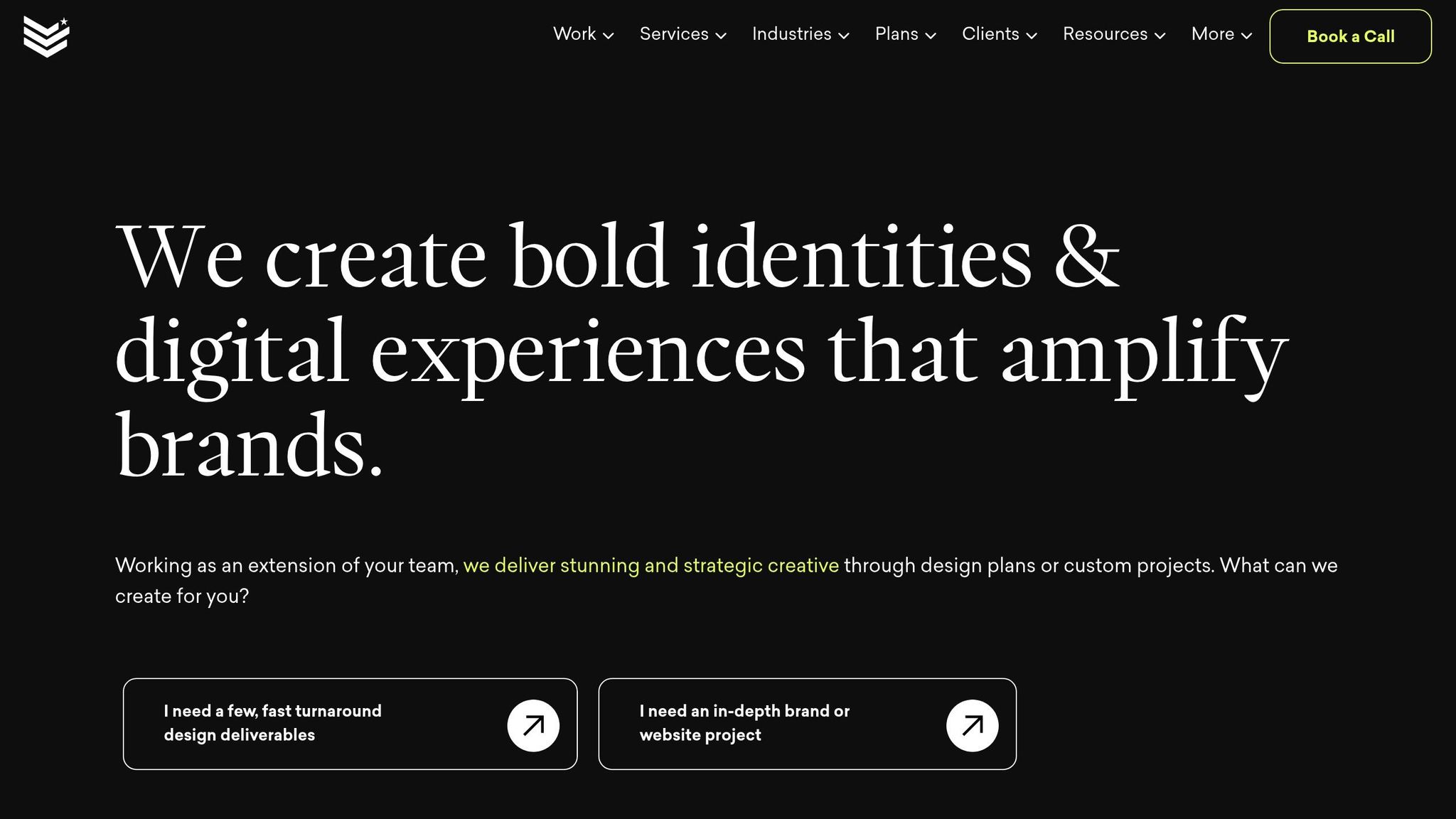
By turning data into actionable journey maps, Visual Soldiers enhances customer experiences and delivers impactful results. Their approach showcases how research-driven mapping can be effectively applied in real-world scenarios.
Using UX/UI Insights in Journey Mapping
Before diving into design, Visual Soldiers begins with a thorough assessment to identify underperforming areas. This discovery phase involves gathering insights through stakeholder interviews, customer feedback, and analytics to understand user behavior at every touchpoint. The Atlanta-based agency also studies industry trends, company values, and messaging to ensure the journey maps align with authentic customer language and expectations.
The result? Stage-based journey maps that outline customer goals, emotions, and pain points across key phases – spanning awareness, consideration, purchase, onboarding, and retention. Tools like web analytics, heatmaps, and usability sessions help pinpoint where users drop off and uncover interaction challenges. These data-driven insights ensure that every stage of the journey is informed by real user behavior.
"They were world class with the discovery, review and delivery process." - Tim Muenchen, VP of Sales & Marketing, FLS Transport
This method ensures that UX/UI improvements address actual issues rather than assumptions. For example, if analytics highlight confusion around pricing or shipping costs (in USD), Visual Soldiers refines comparison tables and adds transparent cost breakdowns earlier in the user flow. Similarly, if data shows low adoption of features after purchase, onboarding flows are redesigned with clearer tooltips and progress indicators.
These insights serve as the foundation for tailored solutions, as outlined below.
Delivering Custom Solutions for Client Success
Visual Soldiers uses a fractional model to integrate seamlessly with client teams, applying research findings to specific deliverables without the expense of full-time hires. This flexible approach has consistently improved customer experiences and business outcomes.
Take their work with Kids in the Game, for example. The agency led a full rebrand that ensured every customer interaction reflected the brand’s true voice. Similarly, Tal Baum of Oliva Restaurant Group noted that the redesigned website not only accelerated business growth but also enhanced the customer experience by meeting all objectives.
"Their fractional model gave us on demand access to a talented team without the overhead of hiring in house. The work was thoughtful, strategic, and always aligned with our goals." - Joel Darby, COO at GoValidate





Practical Strategies for Research-Driven Journey Mapping
Mapping Stages with Research-Validated Touchpoints
Start by defining customer segments based on real data – demographic, behavioral, and attitudinal insights gathered from surveys, CRM systems, and analytics tools – not just internal assumptions . For each segment, dig deeper using qualitative methods like customer interviews, diary studies, and usability tests. These methods help uncover what customers are actually doing and which channels they’re using during key stages: awareness, consideration, purchase, onboarding, use, support, and advocacy .
Then, bring in quantitative data to back up these findings. Tap into web analytics to analyze traffic sources, funnel drop-offs, and search queries. Use call center logs and social listening to identify the touchpoints where customers engage the most – and where they’re running into problems . For example, if many customers abandon their carts when shipping costs are revealed, that’s a clear pain point supported by data.
Once you’ve gathered all this information, create a journey map using a shared document or whiteboard tool. Clearly label each stage with verified touchpoints and include key metrics like conversion rates, Net Promoter Scores (NPS), customer satisfaction (CSAT) ratings, and time on task . Make sure to present data in U.S. formats (e.g., $500, 10,000, mm/dd/yyyy) to align with the market. This ensures your map reflects actual customer behavior across channels like mobile search, social media, email, and in-store visits, instead of relying on assumptions.
Using ROI-Focused Insights to Prioritize Improvements
Once your touchpoints are mapped out, it’s time to prioritize improvements by focusing on return on investment (ROI). Start by quantifying key metrics such as checkout abandonment rates, average order values, and trial-to-paid conversion rates. Ask questions like, “What happens if we lower abandonment by 10%? How many more conversions would that bring, and how much additional revenue could we see monthly in USD?”. Consider customer lifetime value (CLV) alongside these metrics to ensure you’re focusing on changes that yield long-term benefits, not just quick wins.
Next, evaluate the effort required for each improvement. Take into account factors like complexity, cost, time, and dependencies. Use an impact-versus-effort grid to visually prioritize opportunities. High-impact, low-effort changes should come first, while high-impact, high-effort projects can be planned as strategic initiatives. Research shows that optimizing key areas – such as product pages, checkout processes, onboarding experiences, and critical service moments like returns or issue resolution – can lead to major gains in conversion rates, satisfaction, and customer retention.
Updating Maps with Continuous Research
A journey map isn’t a one-and-done tool – it needs to evolve. Keep it accurate by integrating ongoing research into your process. Set up a regular review schedule: quarterly for fast-paced digital businesses or semiannually for more stable industries. During these reviews, cross-functional teams should examine new research, updated analytics, and customer feedback.
Collect feedback consistently through NPS surveys, post-purchase forms, in-app prompts, and tagged support tickets. Use dashboards to track key performance indicators (KPIs) like funnel conversion rates, repeat purchase rates, and support contact rates. Assign clear ownership – whether it’s a customer experience (CX) team, product team, or insights function – to monitor for signs that the map needs updating. Triggers might include significant changes (like a 10–15% shift) in conversion rates, churn, NPS, or CSAT, as well as new product launches or regulatory changes .
When these triggers occur, conduct targeted research – such as brief interviews or usability tests – to understand what’s changed. Then, update only the affected sections of the map. This way, your journey map stays rooted in real customer data without overwhelming your team.
Conclusion: Why Market Research Matters for Journey Mapping
Market research transforms assumptions into reliable blueprints that accurately reflect how customers discover, evaluate, purchase, and use your products or services. Without this foundation, teams risk designing around outdated personas, overlooking critical touchpoints – like community forums or social proof – and focusing their efforts on the wrong stages. Research-backed journey maps reveal hidden pain points across awareness, purchase, and retention phases, leading to improved conversions and customer retention. This data-driven approach lays the groundwork for meaningful, targeted improvements.
By aligning marketing, product development, customer experience, and sales teams around insights drawn from actual customer behavior – through surveys, interviews, analytics, and behavioral data – organizations can ensure every decision is rooted in reality, not assumptions. Marketing can time campaigns to align with key decision moments, product teams can focus on features that matter most, and customer experience teams can address service gaps before they impact loyalty. This unified approach not only streamlines operations but also helps deliver personalized, seamless experiences that today’s U.S. customers expect, directly influencing repeat business and referrals.
Even small-scale research efforts – like brief surveys, a handful of in-depth interviews, or analyzing web traffic data – can dramatically improve the accuracy of journey maps. Think of journey mapping as an ongoing process rather than a one-and-done task. Setting a regular review schedule, such as quarterly for fast-paced industries or semiannually for others, allows you to adapt to shifting customer behaviors. Incorporating insights from tools like NPS surveys, support tickets, and social media listening ensures your maps stay relevant as new touchpoints emerge. This iterative process helps you identify changes early, adjust quickly, and deepen your understanding of your customers – giving you an edge that’s tough for competitors to match.
When companies combine validated journey maps with continuous market research, they make smarter investments and achieve sustainable growth. They avoid costly mistakes in product development and marketing, maximize the impact of limited budgets, and consistently refine how they attract, convert, and retain customers across all channels. In a world where 82% of people are more likely to recommend brands that simplify their experiences, research-informed maps are key to removing obstacles that hinder customer advocacy. Start by validating your initial maps, focus on the top three to five friction points with the greatest impact on revenue or retention, and keep refining. This is how journey mapping becomes more than just a tool – it becomes a strategic driver of growth.
If your customer journey map is built on assumptions, you’re leaving growth on the table.
Let’s replace guesswork with real insight. Our team helps uncover what your customers actually experience and turns it into a strategy that drives conversions, retention, and long-term value.
Start Building A Smarter JourneyFAQs
Market research dives deep into customer behaviors, preferences, and challenges, often revealing stages in the customer journey that might otherwise go unnoticed. By closely examining data, businesses can pinpoint subtle touchpoints – those moments where customers engage with their brand, even in indirect ways.
Recognizing these overlooked stages allows companies to fine-tune their strategies, ensuring a more seamless and engaging experience for their audience. This approach not only addresses pain points but also enhances key interactions, paving the way for stronger, more meaningful customer relationships.
Data-driven customer journey maps rely on actual customer behaviors, offering precise insights rather than relying on assumptions. This approach helps businesses identify real pain points, refine key touchpoints, and craft experiences that feel more tailored to individual needs.
With decisions grounded in data, companies can allocate resources more effectively, resulting in improved ROI and enhanced customer satisfaction. These maps give businesses the tools to create strategies that genuinely connect with their audience.
To keep journey maps accurate and relevant, businesses should consistently collect fresh input from customer feedback, analytics, and market research. This information helps fine-tune the critical stages of the customer journey, ensuring the map mirrors shifts in customer behavior and preferences.
By incorporating real-time updates into mapping tools and conducting regular reviews, companies can stay in sync with changing customer expectations and make smarter choices to enhance the overall experience.