Ethics in Data-Driven Social Media Design
Quick Summary
A significant majority of Americans, 79%, express concern over how their data is used by social media platforms. To address these worries, it's important for designers to focus on three key practices from the outset: request minimal data, provide clear and straightforward explanations, and offer users a transparent choice. Ethical personalization is highlighted as a positive approach, where users receive tailored experiences without feeling exploited. In contrast, manipulation involves tactics like dark patterns, concealed settings, and sticky UX, which are designed to increase user engagement or data collection, often at the expense of user trust. Privacy stands out as a major area of concern, emphasizing the need for responsible data practices in social media design.
79% of Americans worry about how social platforms use their data. So if I use data in social media design, I need to do three things from the start: ask for less data, explain it in plain language, and give people a clear choice.
Here’s the short version:
- Ethical personalization helps users get more relevant experiences without pushing them too far.
- Manipulation uses dark patterns, hidden settings, and sticky UX to get more clicks, more time, or more data.
- The biggest risk areas are privacy, transparency, user control, bias in targeting, accountability, and harm prevention.
- U.S. brands also face legal pressure from rules like the CCPA, plus trust issues when disclosures are weak or consent is unclear.
- Good day-to-day practice means opt-in defaults, double opt-ins, bias checks, accessibility checks, and one clear owner before launch.
A few numbers make the issue plain:
- 79% of Americans are concerned about how companies use personal data on social media
- 68% of adults lose trust in influencers who fail to disclose paid posts or share misleading information
To me, the main test is simple: does this design choice help the user, or does it push them into something they did not mean to do? That question covers privacy, consent, targeting, and trust in one line.
The hidden ethics of our personal data | Daniel Goddemeyer & Dominikus Baur | TEDxUCLouvain
The Core Principles Behind Ethical Social Media Design
Once the risks are clear, ethics has to show up in day-to-day design choices. In practice, six principles should shape every data-driven decision: privacy, transparency, autonomy, fairness, accountability, and harm prevention. These aren’t abstract ideas. They affect what your team builds, asks for, stores, labels, and launches.
| Principle | Concrete Design Action |
|---|---|
| Privacy | Collect only what's needed; limit retention; encrypt sensitive data |
| Transparency | Use plain-language disclosures; clearly label sponsored content and influencer posts |
| Autonomy | Offer double opt-ins; make opt-out settings easy to find; avoid dark patterns |
| Fairness | Audit targeting for bias and stereotypes |
| Accountability | Assign a documented reviewer or governance owner |
| Harm Prevention | Run pre-launch harm checks for vulnerable audiences |
The first rule is simple: collect less.
Privacy and Data Minimization
Only collect the data you need. If a campaign doesn’t need a user’s location, don’t ask for it. If you need engagement data for 90 days, don’t keep it for two years.
That approach cuts risk in a very direct way. The more data you hold, the more you have to protect, manage, and explain. And when sensitive information is involved, encrypted systems aren’t optional.
Transparency, Autonomy, and Informed Choice
Say things plainly. Users should understand what data you’re collecting and why without having to decode dense policy language.
Clear disclosure matters for trust, too. When 68% of adults report losing trust in influencers who fail to disclose sponsored content or share misleading information, labels can’t be vague or hidden.
Autonomy also has to be real, not cosmetic. If opt-out settings are buried or designed to frustrate people, that isn’t much of a choice. The same goes for dark patterns. Easy opt-outs, double opt-ins, and honest defaults give users control they can actually use.
Accountability and Harm Prevention
Give one person or group clear ownership. That could be a governance board or a designated reviewer, but the point is the same: someone needs to be responsible.
Before launch, run checks that ask a few hard questions:
- Who could be harmed?
- Does the targeting exclude or stereotype anyone?
- Are you reaching vulnerable audiences in ways you haven’t fully considered?
Handled this way, governance becomes a practical guardrail for user trust instead of just another internal step.
Those reviews should also catch dark patterns, bias, and accessibility gaps before anything goes live.

Design Risks to Avoid in Data-Driven Social Experiences
Knowing the right principles is one thing. Seeing how they fail in practice is another.
The design choices that do the most damage often seem small at first. But over time, they chip away at trust. 79% of Americans already worry about how companies use their personal data on social media, so people are watching more closely than many teams assume. In day-to-day product and campaign work, those risks tend to show up in three places: consent, targeting, and access.
Dark Patterns That Distort Consent and Engagement
Dark patterns are design choices that push against the user instead of helping them.
You’ve probably seen them before: privacy settings buried deep in account menus, forced continuity that makes canceling a subscription much harder than signing up, or a mess of toggles that makes the opt-out tough to find. Sure, these tactics might help short-term numbers. But they also send a clear message: the platform is trying to win by wearing people down.
Here’s what that looks like in practice:
| Dark Pattern | Ethical Alternative |
|---|---|
| Hidden Settings: Burying opt-out or privacy controls deep in menus | Clear privacy controls placed in bios or pinned posts |
| Forced Continuity: Making it difficult to cancel a subscription or service | One-click cancellation or a "manage preferences" center |
| Emotional Manipulation: Exploiting fear or anxiety to drive clicks | Positive, useful stories that educate or inspire |
The pattern is simple. When people have to work hard to protect themselves, trust drops fast.
Bias in Targeting and Personalization
Consent isn’t the only risk. Targeting can carry bias too.
Lookalike audience models built from narrow, non-inclusive data sets can leave people out if they weren’t represented in the source audience to begin with. The same thing happens with narrow seed audiences. Personalization may look like it’s working on the surface, while underrepresented users are quietly excluded in the background.
That’s what makes this tricky. Aggregate metrics can hide the problem. A campaign can look strong in the dashboard while whole groups remain out of reach.
The practical move here is plain: audit your targeting logic on a regular basis, especially for lookalike audiences.
Accessibility and Inclusion as Design Requirements
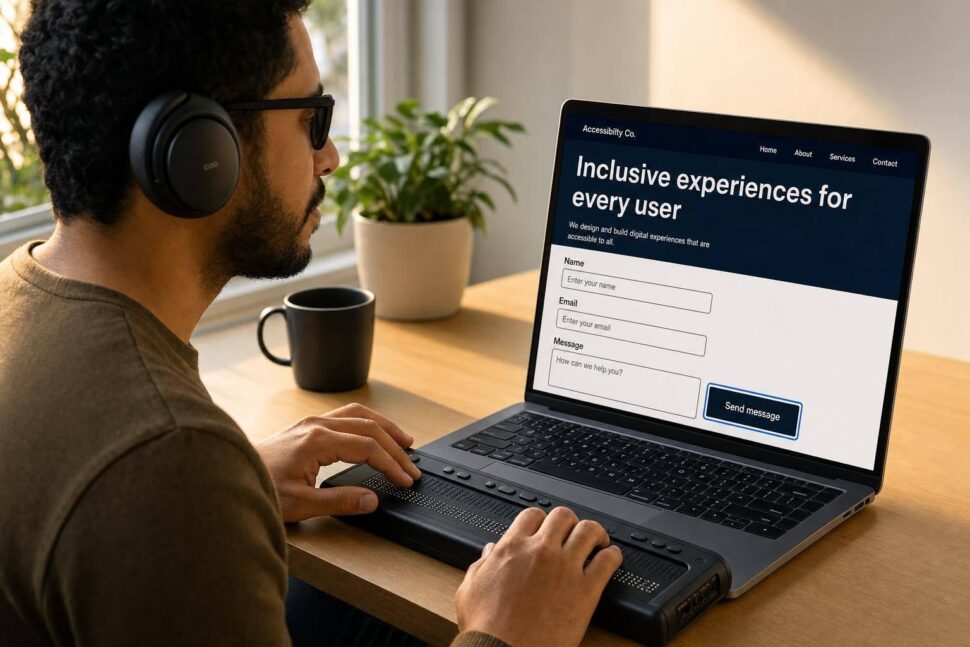
Accessibility is a baseline requirement, not a nice extra. Add alt text, captions, and enough color contrast so people can access and engage with the content.
Then take the next step and build those checks into launch workflows, review steps, and team ownership. If accessibility only shows up at the end, it usually shows up too late.

How to Build Ethical Social Media Design Into Daily Practice
These principles only matter when they show up in briefs, reviews, and approvals. For lean teams working on tight deadlines, the aim isn’t a perfect ethics program. It’s a light, repeatable process that spots problems before they go live.
Use Privacy-by-Design and Consent-by-Default Workflows
Start each campaign by deciding what data you need and why. If the data doesn’t directly support the goal, don’t collect it.
Set conservative defaults so tracking and data collection are opt-in, not opt-out. For email and lead gen, double opt-in workflows help confirm that consent is genuine.
If your team manages several channels, a Consent Management Platform (CMP) can help document permissions across them.
Review Features and Campaigns Before Launch
Use the same pre-launch checklist every time. That simple habit can save a lot of trouble.
Before anything goes live, run a value-versus-risk check, especially when the audience may be more vulnerable. Review data sources for bias and missing information, and look for manipulative dark patterns. Then check alt text, captions, and contrast before launch.
That review should end with one clear owner before launch. If nobody owns the final call, things can slip through the cracks.
Assign Ownership Across Teams
Ethical design tends to break down when ownership is vague. Put accountability in one cross-functional governance team, with marketing, legal, and leadership all represented, so each post lines up with brand standards.
Document responsibilities in a shared brief or launch checklist. That way, everyone knows who’s doing what, and approval doesn’t turn into a guessing game.
Conclusion: A Practical Standard for Responsible Growth
Ethical data-driven design isn’t a one-off checkpoint. It’s a repeatable process that should shape every brief, campaign, and launch decision. In practice, that means using the same standard for privacy checks, bias reviews, and launch approvals.
The standard is simple: does this design choice create genuine value, or does it risk exploiting vulnerable groups? That one question clears up a lot of gray areas. Pair it with privacy-by-design defaults, a pre-launch review habit, and clear ownership across teams, and you get a working system, not just good intentions.
Trust comes more from integrity, reliability, and purpose than from technical skill alone. And the stakes are high: 79% of Americans are concerned about how companies use their data on social media. Trust isn’t a soft metric. It’s a competitive edge that builds over time.
Ethical design comes down to intention, transparency, and impact. That means shifting away from vanity metrics and toward meaningful engagement while building long-term trust along the way.
With that standard in place, Visual Soldiers aligns brand strategy, UX, and creative execution with responsible growth.
Design That Builds Trust
Create digital experiences that drive results while putting clarity, accessibility, and user trust first.
Book a Discovery CallFAQs
Personalization crosses the line into manipulation when it leans on dark patterns or psychological pressure to push people into actions they didn’t freely choose, like forced signups or subscription terms tucked out of sight.
Watch for coercive tactics like buried privacy opt-outs, false urgency, or emotional pressure. Ethical design puts transparency, clarity, and user consent first; manipulation hides terms or nudges people toward choices that serve the brand, not the user.
Platforms should avoid collecting personal information they don’t need for the service they offer. That includes things like detailed personal profiles unless there’s a clear reason they must have them.
They also shouldn’t use data to push, pressure, or steer people into actions they didn’t agree to. And they shouldn’t use it in ways that take advantage of vulnerable groups.
People deserve plain-language disclosure about what data is collected, why it’s collected, how it’s used, and how it’s protected.
Small teams can make ethical design part of everyday work by sticking to a few simple habits: be clear, make things easy to use, and respect user data.
That starts with transparency. Tell people what data you collect and why. Write privacy policies in plain English, not legal fog. And when consent matters, ask for it directly. Double opt-ins are a good way to make sure people know what they’re agreeing to.
Trust also grows through design choices that put people first. That means making your site accessible, labeling sponsored content clearly, and telling stories that feel honest instead of polished to death.
AI can help with repetitive technical work, which is a big win for small teams. But the human side should still lead the process. Keep creative direction and quality control in human hands.

Visual Soldiers
Visual Soldiers is an Atlanta-based creative studio specializing in branding, design & digital experiences.